Quick answer: CE Level 2 motorcycle armour transmits significantly less impact force than Level 1, offering greater protection to your knees, hips, shoulders, elbows, and back in a crash. It is certified under the EN 1621 family of standards. Roadskin includes CE Level 2 armour as standard across its jeans range, at no extra cost.
Most riders think carefully about the abrasion rating of their gear, and rightly so. But a second layer of protection often gets overlooked at the point of purchase: the armour tucked inside your jeans, jacket, or hoodie. That armour is what stands between your joints and the tarmac when an impact happens.
Not all armour is equal. There are two certified levels, and the difference between them matters more than many riders realise. In this guide, we explain what motorcycle armour is, how the CE levels are defined, and why Level 2 offers better protection than Level 1. We will also look at how Roadskin builds Level 2 armour into its gear as standard, so you never have to choose between staying safe and staying within budget.
What is motorcycle armour and where does it sit in your gear?
Motorcycle armour is a set of impact-absorbing protectors fitted into the parts of a garment most likely to strike the ground in a crash. Rather than protecting against abrasion (that is the job of the fabric and any Kevlar lining), armour is designed to soften the blow of a direct impact.
You will typically find armour positioned at five key points:
- Hips: protecting the pelvis and hip joints
- Knees: shielding the kneecap and surrounding tissue
- Shoulders: guarding the shoulder joints in jackets and hoodies
- Elbows: covering the elbow joints in upper-body gear
- Back: a larger protector running along the spine
In jeans and leggings, armour usually sits at the hips and knees. In jackets and hoodies, it covers the shoulders, elbows, and back. Good armour stays put during a crash, which is why adjustable pockets that let you position the protectors correctly make such a difference.
How are CE armour levels defined under EN 1621?
Motorcycle armour sold in the UK and EU is certified under the EN 1621 family of standards. These standards test how well a protector absorbs and reduces impact force before it reaches your body.
The two governing standards are:
- EN 1621-1: covers limb armour, meaning shoulders, elbows, hips, and knees
- EN 1621-2: covers back protectors
During testing, a protector is struck with a set impact force, and testers measure how much of that force passes through to the other side. The lower the transmitted force, the better the armour has performed. Based on these results, armour is graded as either Level 1 or Level 2.
Level 1 armour meets the minimum requirement. Level 2 armour must transmit significantly less force, which places it in the higher-performing category. The exact thresholds differ slightly between limb and back armour, but the principle is the same throughout: Level 2 lets less impact energy reach you.
What is the difference between Level 1 and Level 2 in practice?
The key difference between Level 1 and Level 2 motorcycle armour comes down to how much impact force reaches your body. Level 2 armour transmits notably less force than Level 1, which means your joints absorb less of the shock in a crash.
Put simply, Level 1 clears the safety bar. Level 2 clears it by a wider margin. Both are certified and legal, but Level 2 offers a greater cushion of protection when it counts.
Choose Level 1 if weight and flexibility are your only priorities and you ride at low speeds. Choose Level 2 if you want the highest certified level of impact protection across all your riding, which for most road riders is the sensible default. Because the comfort gap between the two has narrowed enormously in recent years, there is rarely a good reason to settle for less.

Why does Level 2 matter in real riding, not just the lab?
It is easy to dismiss certification figures as laboratory numbers with little bearing on a real crash. But the physics that governs a controlled impact test is the same physics at work when a rider hits the road.
A real crash is chaotic. You might come off at a junction, get caught out by a diesel spill, or lose the front on a damp roundabout. In each case, your hips, knees, shoulders, or spine can take a sudden, concentrated hit. Armour that transmits less of that force gives your body a better chance of walking away with a bruise rather than a break.
The difference becomes more important as speeds rise. For motorway and higher-speed riding, where impacts carry far more energy, the extra margin that Level 2 provides is exactly the sort of protection you hope you never need but will be grateful for if you do.
How does Roadskin include Level 2 armour as standard?
Roadskin fits CE Level 2 armour as standard across its jeans range, at no additional cost. This is a deliberate decision by a company run by lifelong bikers. Owners Ian and Nicky have spent decades riding, and Ian is a proud finisher of the Red Bull Romaniacs five-day race (he picked up a broken collarbone along the way on one occasion, so he understands the value of good protection first-hand).
That commitment runs right across the range, not just the flagship models:
- The Taranis Elite AAA-rated single-layer jeans include Level 2 armour
- The Paranoid X AAA-rated jeans include Level 2 armour
- The Spencer AAA-rated jeans come with Rheon™ Level 2 armour
- The Easyrider II armoured hoodie ships with CE Level 2 back, shoulder, and elbow armour
- The ladies' Freya motorcycle leggings arrive with CE Level 2 knee and hip protectors
Because Level 2 is built in as standard rather than sold as a premium upgrade, you get the highest certified level of impact protection without a surprise at checkout. It is a genuine point of difference from brands that ship Level 1 inserts by default or leave you to buy armour separately.
What is Rheon™ Level 2 armour and how is it different?
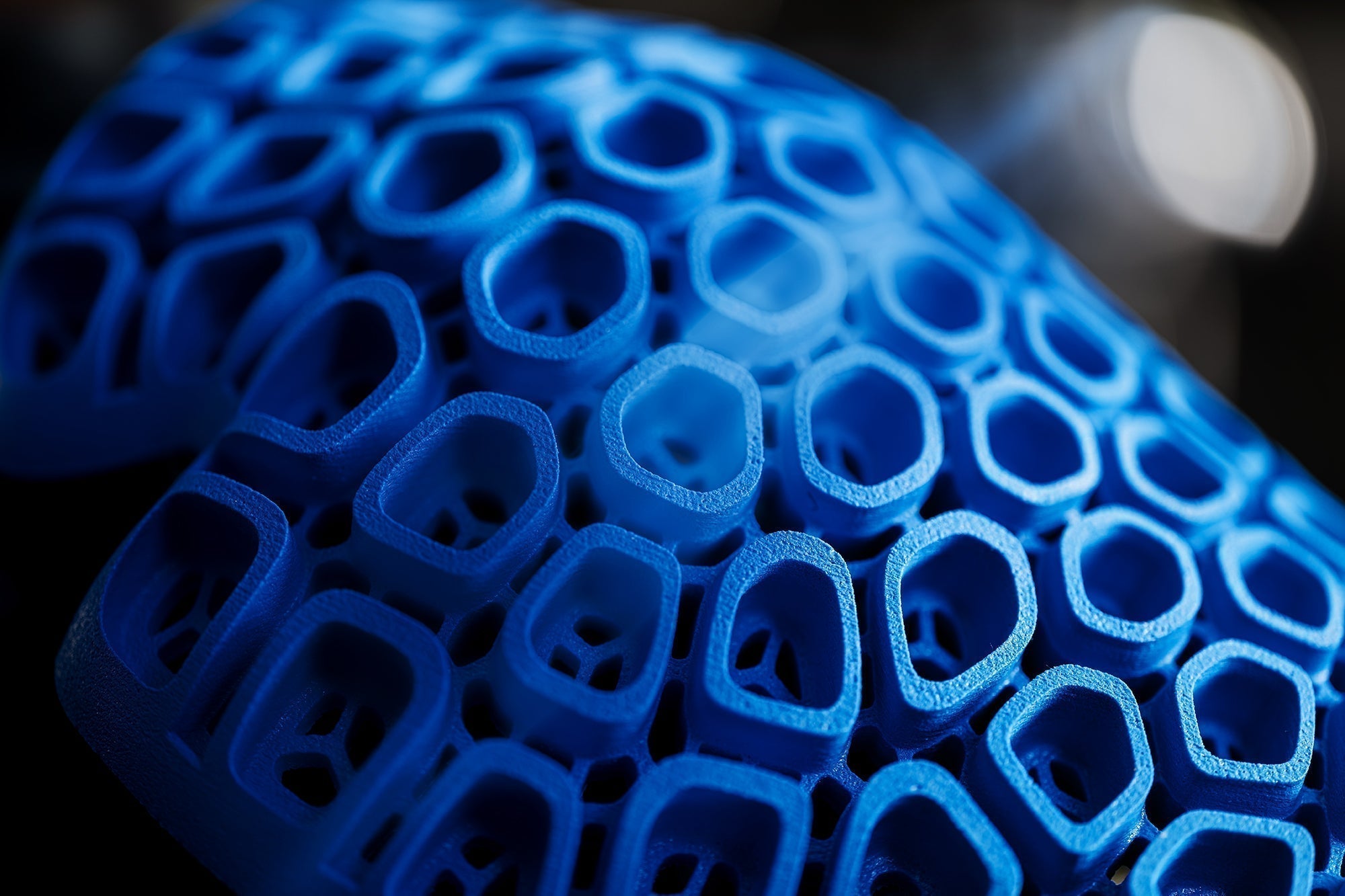
Rheon™ is a branded armour technology used in the Roadskin Spencer jeans and can be bought if a rider prefers a thinner style than the default supplied armour; it works quite differently from a conventional hard-shell insert. Instead of a rigid plastic protector, Rheon™ is made from a non-Newtonian material that stays soft and flexible during normal riding, then instantly hardens on impact to absorb the shock.
There are three practical advantages to this approach:
- Comfort: at just 90 to 130 grams per protector, the 3D-printed Rheon™ armour is light and moulds naturally to your body for a barely-there feel
- Ventilation: its patented cell structure lets air flow through, keeping you cooler on long or hot rides
- Slim profile: the low bulk means the armour is far less noticeable off the bike
Riders notice the difference. As Graeme S.. said in a verified review of the Rheon armour: "The RHEON armour is simply amazing fitted to my Taranis motorcycle jeans. Well worth the additional cost for slim fitting comfort and added protection. Ian M. added: "Be hard pushed to know the armour is installed which is great particularly when off the bike."
That combination of flexible comfort and hard-on-impact protection is exactly why non-Newtonian armour like Rheon™ has become such a popular alternative to traditional hard-shell inserts.
What should you ask when comparing armoured gear?
Not all gear that mentions armour offers the same level of protection. When you are comparing options, a few simple questions will tell you what you are really getting:
- Is armour included, or sold separately? Some gear is advertised with pockets for armour, but the protectors cost extra
- What level is the armour, 1 or 2? If the listing does not say, assume Level 1 and ask
- Which areas are protected? Check that hips, knees, shoulders, elbows, or the back are all covered where relevant
- Can the armour be adjusted? Protectors that can be positioned correctly stay where they should in a crash
- What is the abrasion rating of the garment itself? Armour and abrasion resistance are two separate things, and you want both
Ask these questions, and you will quickly see the difference between gear that is genuinely protective and gear that simply has the word "armour" in the description.
Protection that comes as standard, not as an upsell
Level 2 motorcycle armour transmits less impact force than Level 1, which gives your joints and spine a better chance in a crash. It is certified under EN 1621-1 for limbs and EN 1621-2 for the back, and for most road riders it is the sensible choice.
Roadskin makes that choice simple by fitting CE Level 2 armour as standard across its jeans range, with no hidden cost and no need to shop for protectors separately. Whether you choose the single-layer Taranis Elite, the hybrid Paranoid X, or the Rheon™ pre-equipped Spencer, you get the highest certified level of impact protection built in from the start.

If you are upgrading your gear this season, take a look at the Roadskin motorcycle jeans range and ride with the confidence that comes from knowing your protection is not an afterthought.
Frequently asked questions
Is Level 2 motorcycle armour worth the difference over Level 1?
For most road riders, yes. Level 2 armour transmits significantly less impact force than Level 1, offering a greater margin of protection to your joints and spine. As modern armour like Rheon™ is now light and flexible, you gain that extra safety with very little compromise on comfort.
Does Roadskin charge extra for Level 2 armour?
No. Roadskin includes CE Level 2 armour as standard across its jeans range at no additional cost. This sets it apart from brands that default to Level 1 inserts or sell armour separately.
What standards certify motorcycle armour in the UK?
Motorcycle armour is certified under the EN 1621 family of standards. EN 1621-1 covers limb armour for the shoulders, elbows, hips, and knees, while EN 1621-2 covers back protectors. Both test how much impact force a protector transmits before it reaches your body.
What is Rheon™ armour made from?
Rheon™ is made from a non-Newtonian material that stays soft and flexible during normal riding but hardens instantly on impact. Each protector weighs just 90 to 130 grams and uses a 3D-printed, ventilated cell structure, giving Level 2 protection with a slim, comfortable profile.
Which body parts does motorcycle armour protect?
Motorcycle armour typically protects five areas: the hips, knees, shoulders, elbows, and back. In jeans, armour usually covers the hips and knees. In jackets and hoodies, it protects the shoulders, elbows, and back.
Conclusion:
If you would like to discuss any further points on this topic of motorcycle armour and what you should choose, then please don't hesitate to contact us.


Share:
Ride Through History: The UK's Best Heritage Motorcycle Routes
Know Your Kit: What the Law Actually Says About Motorcycle Clothing